Sandy Crush
From Tetris to Sand Blast: How a Simple Twist Hit 1M Downloads
In May, Sand Blast launched on the App Store and quickly passed 1M downloads, reaching the Top 5 Puzzle Games and Top 10 Free Games in Canada.
Just two months later, Sand Crush—a similar game—hit #1 in Canada’s Puzzle chart.
When multiple games with the same mechanic top the charts, it’s clear: the gameplay loop is market-validated.

The Enduring Power of Tetris
So why does this “falling blocks” genre, born from Tetris decades ago, keep reinventing itself and thriving? The answer lies in the emotional design at its core.
Classic Tetris created two emotional triggers that made it timeless:
- Urgency – blocks falling faster and faster push players into split-second decisions.
- Relief – every cleared line delivers a burst of satisfaction.
While Tetris game loop created an addictive sense of mastery, it also made the game stressful and fatiguing—especially for casual or new players.

But mobile-first variants like Sand Blast shift the formula: instead of time pressure, players drag blocks from a tray and place them freely. There’s no countdown, no forced reaction speed. This makes the game far more beginner-friendly while still leaving room for depth.

What Sand Blast Did Differently
Sand Blast turned blocks into sand, which spread out when placed. That simple twist changes the strategy: players must anticipate the final shape after placement.
This shifts the core tension from “fast reflexes” to long-term planning—a gameplay style that resonates with players who prefer thinking a few steps ahead.
Other smart design choices:
- Session flexibility – No time pressure, so it’s perfect for short bursts during commutes or breaks.
- Aesthetic polish – Retro pixel-art style combined with smooth sand-flow animations make it visually satisfying.
- Feedback loop – Combos and scoring milestones keep players motivated in both the short and long term.
In short: Sand Blast reimagined Tetris for the mobile era—shifting from stressful speed to strategic flow.
The Takeaway for Developers
When a gameplay formula has been proven by multiple titles across regions, it signals opportunity. Developers don’t need to reinvent the wheel. Instead, they can:
- Adapt validated mechanics to new markets.
- Localize for cultural preferences.
- Differentiate with art style, polish, or monetization strategy.
In fact, despite overseas success, many web game platforms still have no representation for this mechanic. That’s a gap waiting to be filled.

Validated gameplay is a shortcut to reducing risk and accelerating growth—because when the market has already spoken, all that’s left is execution.
What do you think—does the “sand puzzle” genre have staying power, or will it be a short-lived trend? 🤔
Vibe Coding a Mini Game in 30 Minutes With AI
In my last post, I shared how Sand Blast proved that the “sand puzzle” mechanic is market-validated. Link: From Tetris to Sand Blast
This time, instead of analyzing, I wanted to see if I could prototype a web version using AI.
Talking to AI Like a Teammate
I started with a simple prompt to GPT-5: 👉 “Please use HTML and vanilla JavaScript to make a game similar to Sand Blast. Video reference attached.”
Within minutes, it gave me a working prototype—blocks dropping like classic Tetris. Playable, but not really “sand.” Just blocks.

So I gave feedback:
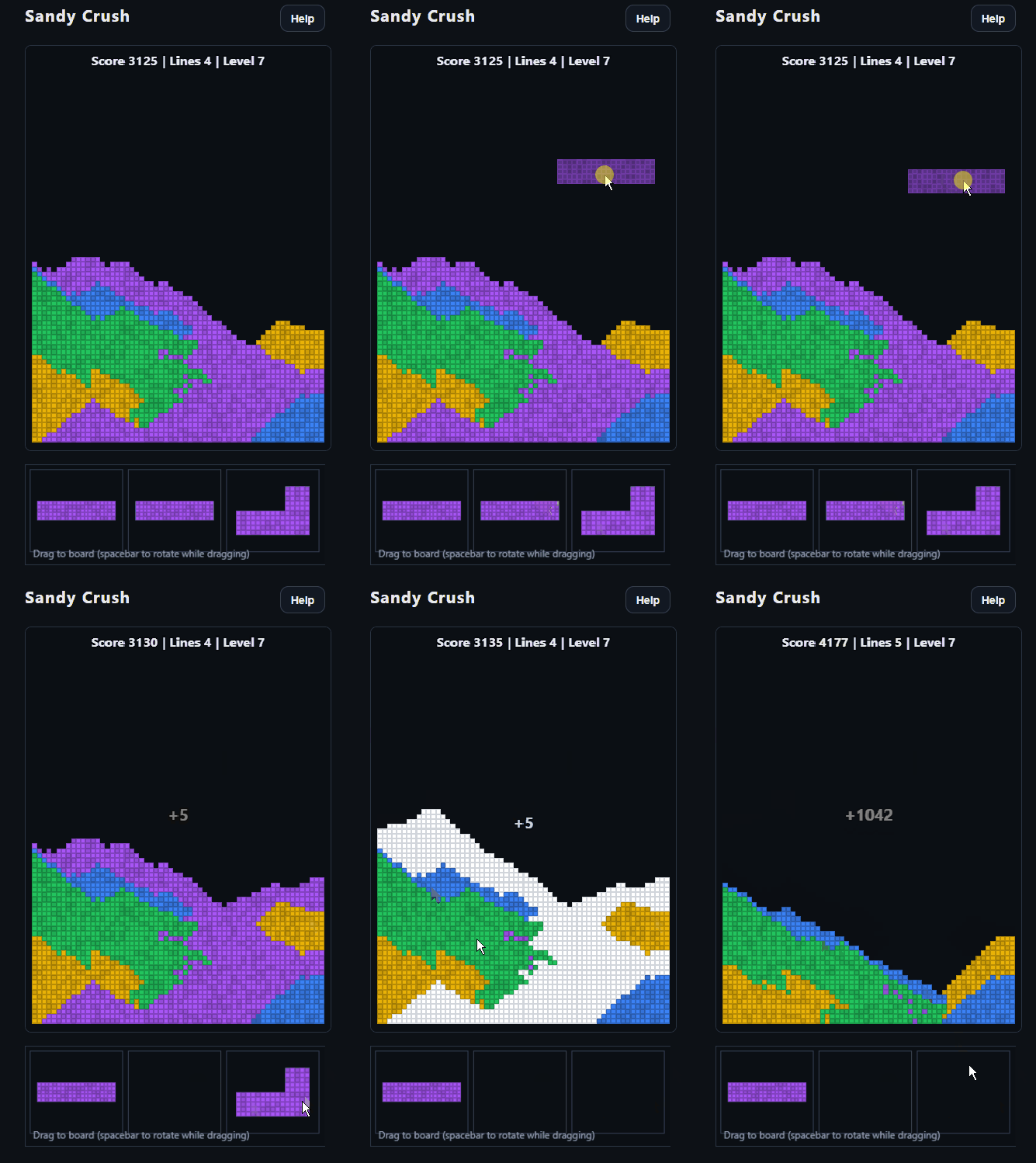
- The board should be a 100×100 grid, each cell representing a grain of sand.
- Each block should break into 6×6 grains once placed.
- Three preset blocks should appear in a tray at the bottom and be dragged into the board.
One minute later, the falling sand looked right. But the elimination rule was wrong—it cleared rows like Tetris, ignoring color.
Iterating Through Conversation
I told GPT-5:
- “Pieces should only clear when same-color sand connects from left to right.”
It updated the logic. Still not perfect. So I added more detailed instructions, drawing on my game dev experience:
- “Only check for chains once the sand has completely settled.”
- “If lower sand is cleared, upper sand should fall and trigger new clears.”
- “Add a 0.5s white flash effect before disappearance.”
GPT-5 rewrote the code, explained its changes, and even asked me: “Do you also want automatic looping until no more chains are possible?”
Yes, of course—that’s what makes chain clearing satisfying.
After fewer than 10 back-and-forths, and about 30 minutes total, I had a working sand puzzle prototype with chain clears, physics, and effects—without writing a single line of code myself.
🎮 Try it here: sandy-crush.vercel.app
What I Learned
- AI bridges logic – I described outcomes, and GPT-5 figured out the sequencing on its own.
- Conversational workflow – Instead of debugging, I guided it with feedback shaped by my past experience.
- Speed + focus – What once took hours or days now fits into a coffee break. I stayed on design intent, while AI handled execution.
⚡️ For me, this was proof that AI isn’t just “helping with code”—it’s becoming a true co-creator. From market validation to a working prototype, the cycle has never been faster.
👉 Would you use AI like this to prototype your next game mechanic?
🎮 Try the game here: sandy-crush.vercel.app
Purchase
In order to download this game you must purchase it at or above the minimum price of $1 USD. You will get access to the following files:
Leave a comment
Log in with itch.io to leave a comment.